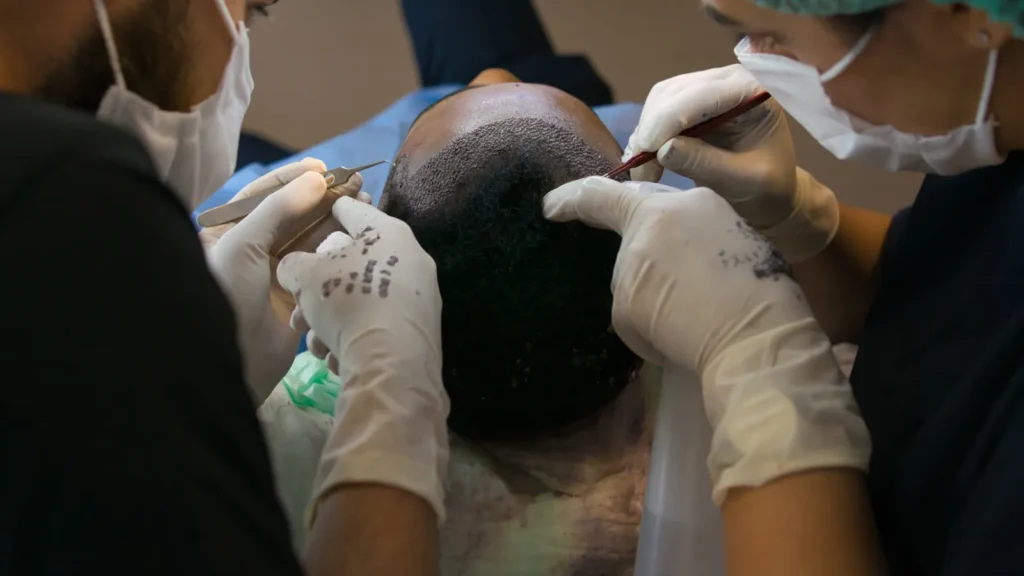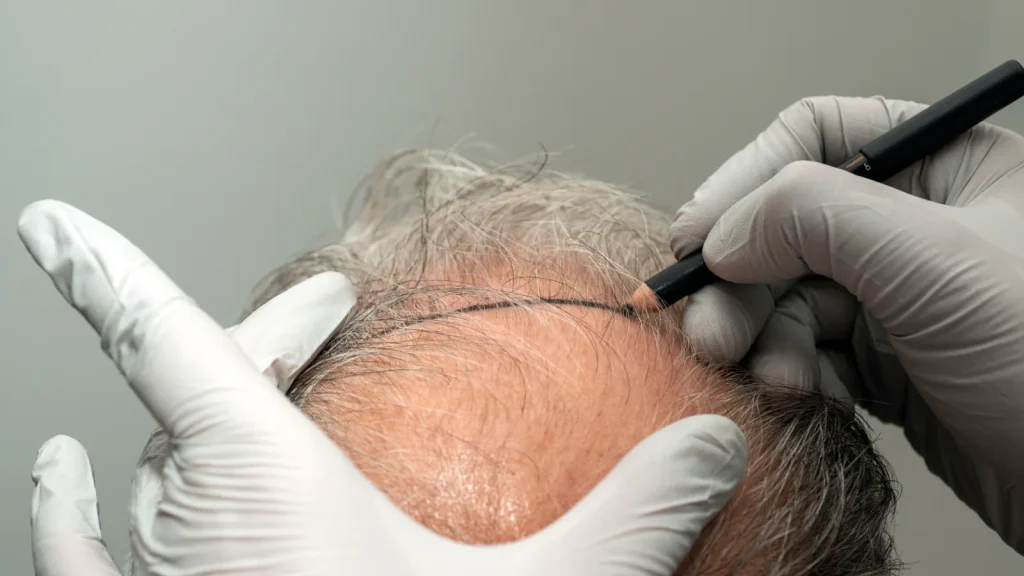
“How many grafts?” is usually the first question people ask, because it shapes both the plan and the price. Here is how graft counts are estimated, with typical ranges by stage of hair loss.
What is a graft?
A graft is a follicular unit: a natural group of one to four hairs that grow together. Grafts are taken from the back and sides of the scalp, where hair is genetically resistant to thinning, and placed into thinning or receding areas.
Typical graft ranges by stage
Surgeons often describe male pattern hair loss using the Norwood scale, from stage 1 (no recession) to stage 7 (extensive loss). These ranges are a rough guide only.
| Stage of hair loss | What it looks like | Typical grafts |
|---|---|---|
| Early recession (stage 2 to 3) | Receding temples or hairline | About 1,000 to 2,000 |
| Moderate (stage 3 to 4) | Recession plus thinning on top or at the crown | About 1,500 to 3,000 |
| Advanced (stage 5) | Larger thinning across the top and crown | About 3,000 to 4,500 |
| Extensive (stage 6 to 7) | Most of the top and crown | 5,000 to 6,500+, in one large session or over more than one, depending on donor supply |
Rough ranges only. Your graft count is confirmed at your consultation.
What changes your number
The density you want
A natural-looking result does not need the density you had at 18. Your surgeon plans enough grafts to look full from normal viewing distances.
Your hair characteristics
Thick, coarse or wavy hair covers more scalp per graft than very fine, straight hair. Contrast between hair and skin colour also matters.
Your donor supply
Donor hair is limited. A good plan uses it wisely, keeping some in reserve in case you want more work later.
Future hair loss
If you are still losing hair, your plan considers how your pattern may progress. Medication, PRP or DNA-guided treatment may be recommended to protect existing hair.
How your graft count is estimated
At a consultation, your team assesses the area to treat, your donor density and your goals, then gives you an estimated graft count. That estimate is reflected in your quote. You can start with photos from home.
Frequently asked questions
Is 2,000 grafts a lot?
It is a common, moderate session, often enough to restore a receding hairline and temples. Larger areas, like the top and crown together, usually need more.
How many hairs are in 3,000 grafts?
Each graft holds one to four hairs, so 3,000 grafts often contain roughly 6,000 to 9,000 hairs, depending on your hair.
Can I get 6,500 grafts in one session?
Large sessions of 6,500+ grafts are possible for some patients with strong donor supply. Very large plans are sometimes split over two sessions. Your surgeon will advise what is right for you.
Will I need a second session?
Some patients choose a second session later to add density or treat new areas. Your plan will explain whether that is likely.
Book a consultation