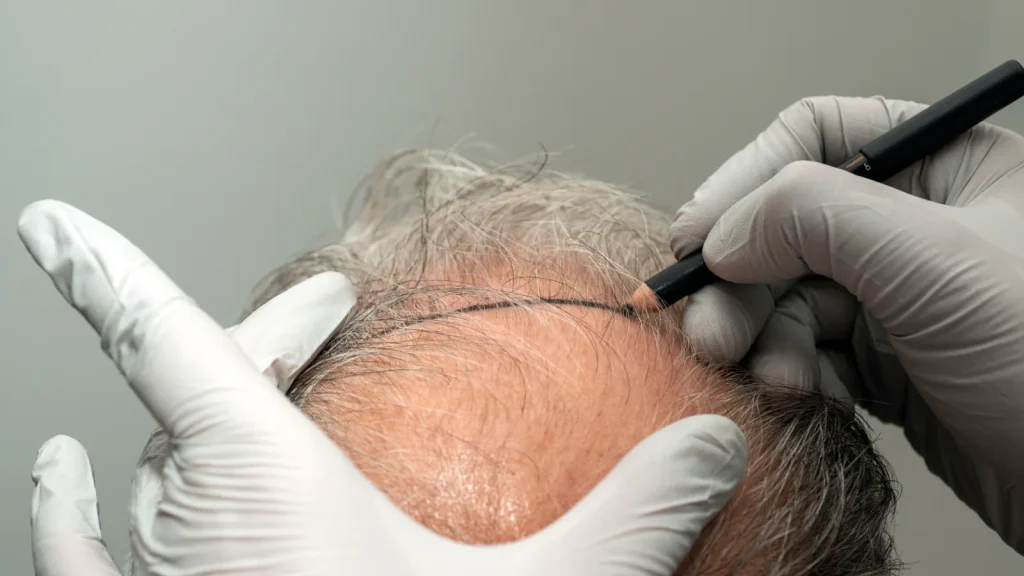
Age comes up in almost every consultation, especially with younger patients who are noticing a receding hairline for the first time.
Why surgeons are careful with younger patients
In your early twenties, it is hard to predict how far pattern hair loss will progress. A low, dense hairline that looks great at 23 can look out of place at 45 if the hair behind it continues to thin. Donor hair is limited, so using it too early can leave fewer options later.
What matters more than age
- Stability: how quickly your hair loss is progressing.
- Pattern and family history: clues to where your hair loss may be heading.
- Donor supply: how much hair is available at the back and sides.
- Expectations: a mature, age-appropriate hairline rather than the one you had at 16.
- Long-term plan: whether medication or PRP will protect your existing hair.
Is 25 too young?
Not necessarily. Some people in their mid-twenties are good candidates with a conservative plan. Others are better served by medication first, with a transplant considered later. The right answer depends on your hair, not the number.
Is there an upper age limit?
There is no strict upper limit. Older patients with good general health and stable hair loss can be excellent candidates, because their pattern is easier to predict.
Frequently asked questions
Can I get a hair transplant at 22?
It is possible, but surgeons are usually cautious at that age. Medication is often recommended first, with a conservative plan if a transplant goes ahead.
Is 50 too old for a hair transplant?
No. Many patients in their fifties and older are good candidates, often because their hair loss is more predictable.
Should I wait until my hair loss stops?
Not always. A good plan can account for future loss, often with medication to protect existing hair.
What hairline is right for my age?
An age-appropriate hairline that suits your face now and still looks natural in the future. It is designed with you at your consultation.
Book a consultation