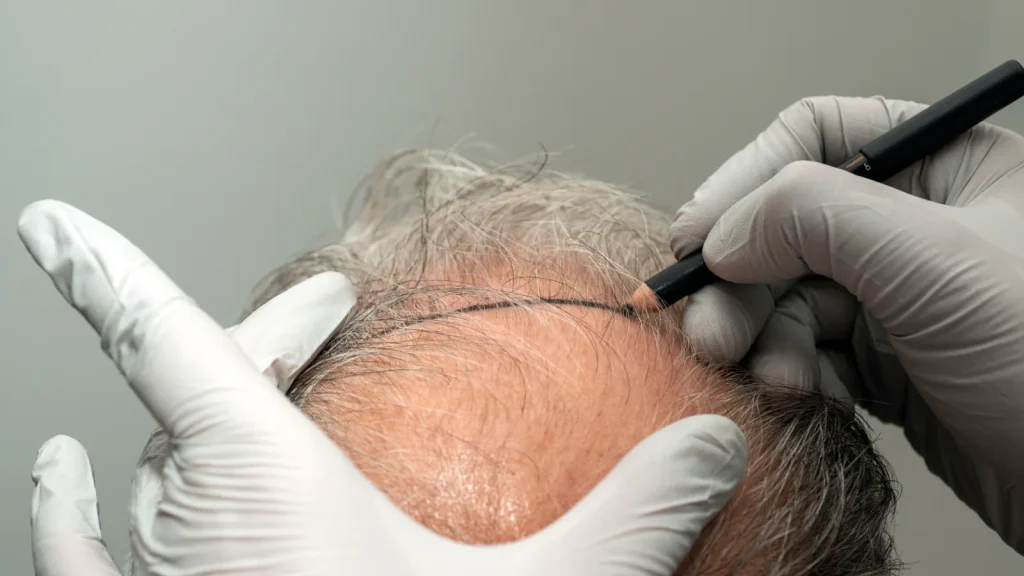
It is a big decision, financially and personally. Here is a balanced way to think it through.
The benefits
- Uses your own hair, which grows, can be cut and styled
- Transplanted hair typically keeps growing long term
- No daily products or concealers for the transplanted area
The limits
- Results take 12 to 18 months
- It doesn’t stop hair loss in the surrounding hair, so medication or PRP may be recommended
- Donor hair is limited, so it can’t recreate the density of your teens
- Some people choose a second session later
Who it tends to suit
- A receding hairline, thinning temples or crown
- Stable, predictable hair loss
- Enough healthy donor hair at the back and sides
- Realistic expectations about density and timing
Thinking about cost
Compare quotes based on graft count, who performs each step and what is included, rather than the headline price. Many people also compare a one-time procedure with years of ongoing costs for concealers, hair systems or treatments. What affects the cost
A good first step
A consultation, gives you a realistic plan, a graft estimate and a clear quote. We’ll tell you honestly if a transplant isn’t the right option for you.
Frequently asked questions
Do hair transplants look natural?
A natural result depends on hairline design, graft placement and angle. Planned well, transplanted hair grows like your own.
Is a hair transplant a one-time procedure?
Many people have one procedure. Some choose a second session later to add density or treat new areas.
What are the alternatives?
Medication, PRP, hair systems and concealers. Many people combine treatments with a transplant.
How do I know if I’m a candidate?
A consultation assesses your hair loss, donor supply and goals.
Book a consultation