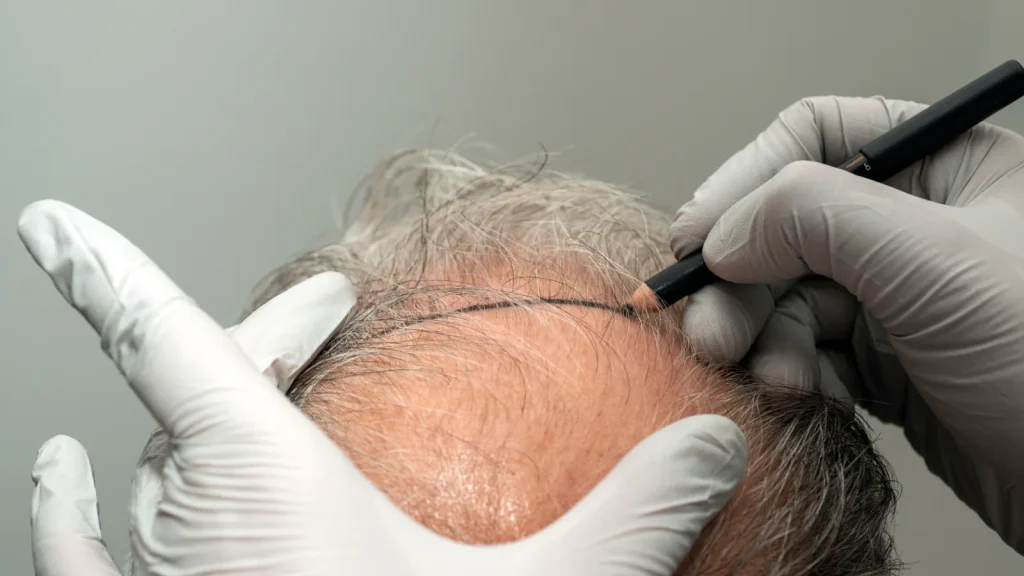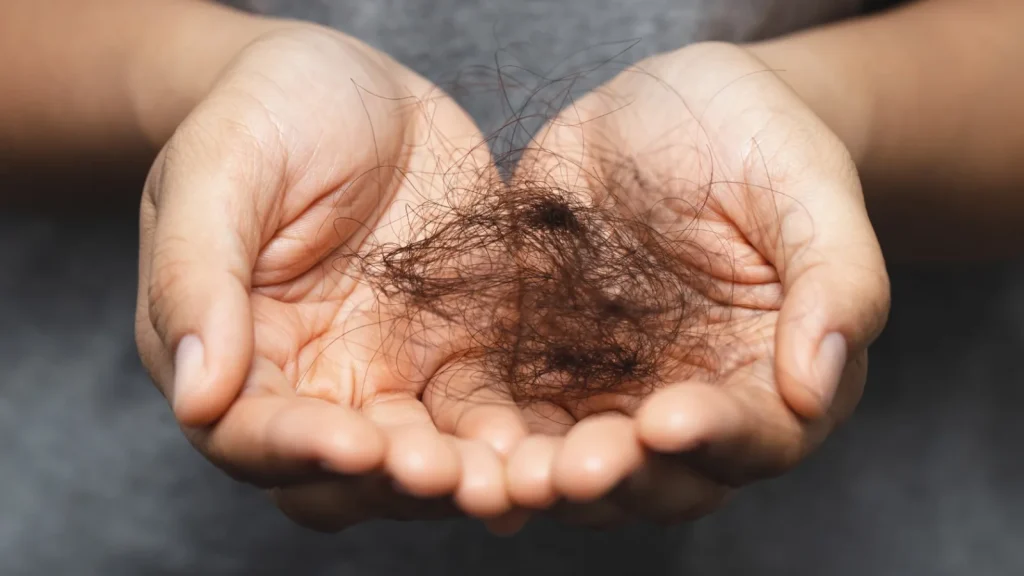
Seeing hair fall out after a transplant can be alarming. In most cases it is a normal, temporary part of recovery.
Two kinds of shedding
Transplanted hair shedding
Most transplanted hairs shed between weeks 2 and 8. This is expected. The follicles stay in place and start a new growth cycle.
Shock loss
Sometimes nearby native hair also sheds, in the recipient area or around the donor area. This is called shock loss. It is thought to be a temporary reaction of nearby follicles to the procedure.
How long does it last?
Shock loss usually appears within the first few weeks. In most cases the hair regrows over the following three to four months, alongside the transplanted hair. Hair that was already very weak and close to being lost may not return.
Who is more likely to notice it?
- People with significant thinning in the area being treated
- Women, particularly when grafts are placed between existing hair
- Larger sessions with many grafts placed close to existing hair
What can help
- Following your aftercare carefully
- Medication to support existing hair, if suitable, which your team may discuss before or after surgery
- PRP packages to support existing hair
- Patience: most of what sheds comes back
If you are worried about shedding at any stage, contact your team. That is what follow-up is for.
Frequently asked questions
Is shock loss permanent?
In most cases, no. Hair usually regrows over the following months. Hair that was already very weak may not return.
When does shock loss start?
Usually within the first few weeks after the procedure.
Can shock loss happen in the donor area?
Yes, sometimes. It is usually temporary and regrows.
How is shock loss different from normal shedding?
Normal shedding involves the transplanted hairs; shock loss involves nearby existing hair. Both are usually temporary.
Book a consultation